VAI Blog
VAI Experts cover the hottest topics that affect Wholesale Distributors and Manufacturers
VAI Experts cover the hottest topics that affect Wholesale Distributors and Manufacturers
VAI Experts cover the hottest topics that affect Wholesale Distributors and Manufacturers

Meat and Seafood ERP Software: Manage Catch Weight, Lot Traceability, and FSMA Compliance

Joe Scioscia
|
Meat and seafood distributors need ERP software built specifically for the complexities of protein distribution. This blog explains how an integrated ERP can connect catch-weight processing, lot traceability, FSMA 204 compliance, warehouse management, production, yield tracking, and financials through a single real-time database. It highlights how purpose-built workflows such as FEFO, broken-case management, weight-based pricing, barcode scanning, and bidirectional traceability can improve inventory accuracy, recall readiness, cost visibility, and margin control. The blog also provides five key criteria for evaluating meat and seafood ERP software, including database integration, protein-specific functionality, mobile capabilities, compliance, and analytics.
Meat and Seafood ERP Software: Manage Catch Weight, Lot Traceability, and FSMA Compliance
|
Joe Scioscia

Essential ERP Features for Meat and Protein Processors

Ryan Radonavitch
|
Meat and protein processors face increasingly complex supply chains and stricter traceability requirements, making specialized ERP capabilities essential for maintaining compliance and operational efficiency. With FSMA 204 requirements approaching in July 2028, businesses handling certain seafood and ready-to-eat protein products will need detailed traceability records that can be provided to the FDA within 24 hours. Key ERP capabilities include catch weight processing, lot-level traceability, cut room and production management, MRP, broken case tracking, route and load management, and rebate and billback management. These tools help businesses maintain accurate product and lot information from receiving through production and delivery, improve inventory and production visibility, respond quickly to recalls, and reduce compliance risks. Choosing an ERP with purpose-built functionality for the protein industry can help processors and distributors build a more connected, accurate, and compliant operation.
Essential ERP Features for Meat and Protein Processors
|
Ryan Radonavitch

Supply Chain Digital Transformation: A Practical Guide for Mid-Market Manufacturers

Pete Zimmerman
|
Supply chain digital transformation helps mid-market manufacturers improve visibility, reduce costs, and respond faster to disruptions by replacing disconnected, manual processes with integrated, real-time systems. The blog outlines five key pillars: end-to-end visibility, demand forecasting, inventory and warehouse digitization, supplier and partner integration, and real-time analytics.
It also addresses common challenges such as legacy systems, poor data quality, limited change-management resources, and budget concerns. A six-phase roadmap recommends mapping current processes, cleaning data, implementing an integrated ERP, digitizing the warehouse, connecting suppliers and customers, and adding analytics and predictive forecasting.
VAI S2K Enterprise supports these capabilities through a single integrated platform for ERP, supply and demand planning, warehouse management, EDI, eBusiness, and analytics.
Supply Chain Digital Transformation: A Practical Guide for Mid-Market Manufacturers
|
Pete Zimmerman
WMS Requirements for Pharmaceutical Wholesalers and Drug Distributors

Gina Parry
|
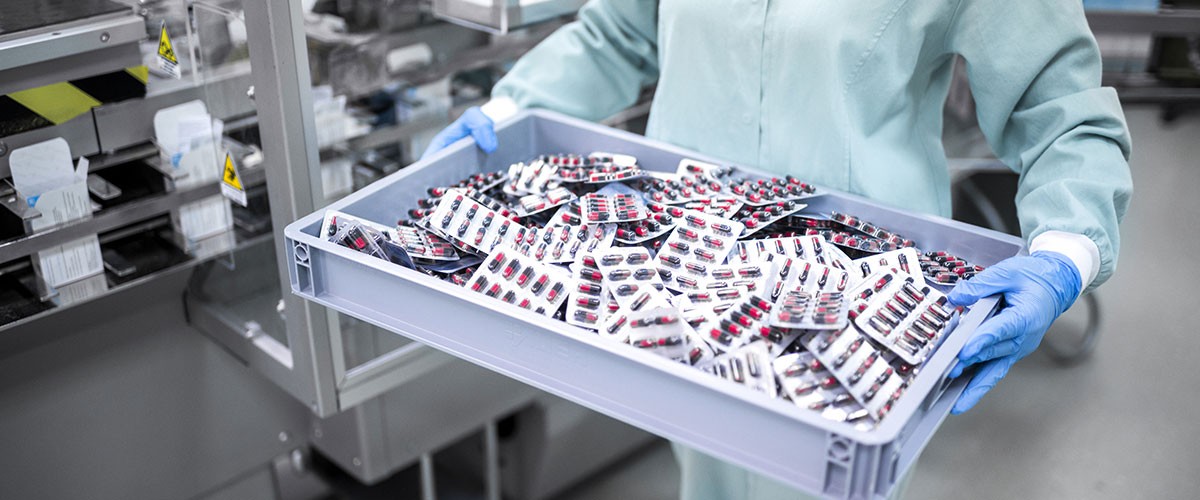
Pharmaceutical wholesalers and drug distributors need a specialized Warehouse Management System (WMS) to manage complex inventory requirements and maintain compliance with DSCSA, FDA, GMP, and DEA regulations. A modern pharmaceutical WMS provides end-to-end lot, serial number, expiration, temperature, and traceability management while reducing manual errors and compliance risks.
Key capabilities include automated DSCSA/EPCIS verification, controlled-substance management, cold-chain monitoring, audit trails, barcode and RF processing, recall management, FEFO picking, and multi-location support.
The right WMS can improve compliance and audit readiness, increase picking accuracy, reduce expired inventory and waste, and provide real-time supply chain visibility. The blog highlights S2K WMS, integrated with S2K Pharma ERP, as a pharmaceutical-capable solution designed to help distributors adapt to evolving regulations and technologies while supporting scalable operations.
WMS Requirements for Pharmaceutical Wholesalers and Drug Distributors
|
Gina Parry

How Food Distributors Track Expiration Dates Across Multiple Warehouses
Ryan Radonavitch
|
Managing perishable inventory across multiple warehouses requires accurate visibility into lot numbers, expiration dates, and shelf life. A centralized ERP with lot tracking, FEFO (First Expired, First Out), automated alerts, and real-time inventory visibility helps distributors reduce waste, improve inventory accuracy, and prevent short-dated products from becoming write-offs.
With VAI S2K Enterprise for Food, distributors can manage expiration dates, automate FEFO picking, monitor inventory across locations, and strengthen traceability and recall readiness—all from one platform.
How Food Distributors Track Expiration Dates Across Multiple Warehouses
|
Ryan Radonavitch

How ERP Improves Shop Floor Visibility and Real-Time Production Control
Pete Zimmerman
|
Real-time ERP shop floor visibility connects production activity—including work orders, labor, material consumption, and quality outcomes—to inventory, purchasing, job costing, and financial reporting. By capturing data at the point of work through barcode and mobile technology, manufacturers can identify production delays, improve job costing, prevent material shortages, monitor labor performance, and address quality issues before they escalate. VAI’s S2K Shop Floor Control provides real-time work order tracking, barcode-driven labor reporting, material consumption tracking, operator accountability, and lot and serial number control, giving teams across production, purchasing, finance, and customer service access to accurate, up-to-date information for faster decisions and greater operational control.
How ERP Improves Shop Floor Visibility and Real-Time Production Control
|
Pete Zimmerman

Beverage Distribution ERP Software: Improve Inventory, Lot Tracking, and Route Management
Joe Scioscia
|
Beverage distributors face unique operational challenges, including perishable inventory, lot and date tracking, returnable containers, direct-store delivery, route accounting, and tight margins. An integrated beverage distribution ERP brings inventory, warehouse operations, routing, receivables, and financials together on a single live database, helping eliminate disconnected systems and manual reconciliation. The article explains how capabilities such as FEFO rotation, bidirectional lot traceability, deposit and empties tracking, mobile proof of delivery, route optimization, real-time credit controls, and demand forecasting can reduce waste, improve recall readiness, control costs, and provide better visibility across the operation. It also outlines key criteria distributors should consider when evaluating ERP software and how VAI S2K Enterprise for Food & Beverage supports these workflows on one integrated platform.
Beverage Distribution ERP Software: Improve Inventory, Lot Tracking, and Route Management
|
Joe Scioscia

On-Premises vs. Cloud ERP in 2026: Which Is Best for Mid-Market Companies?

Matthew Petito
|
Choosing between cloud, on-premises, and hybrid ERP is one of the most important technology decisions mid-market companies will make. This blog compares each deployment model, outlining the advantages, drawbacks, and ideal use cases for cloud, on-premises, and hybrid ERP in 2026. It explores key considerations such as total cost of ownership, deployment speed, customization, IT requirements, scalability, data sovereignty, and long-term business goals. The article also explains how VAI S2K Enterprise supports all three deployment options with the same software, allowing businesses to adapt as their needs evolve without changing ERP systems.
On-Premises vs. Cloud ERP in 2026: Which Is Best for Mid-Market Companies?
|
Matthew Petito

ERP for Durable Goods Manufacturers: How to Manage Complex BOMs, Long Production Cycles, and Service Workflows
Pete Zimmerman
|
Durable goods manufacturers face operational challenges that generic ERP systems often cannot support, including complex multi-level bills of materials (BOMs), extended production cycles, and long-term post-sale service requirements. This blog explores why manufacturers of industrial equipment, medical devices, transportation components, and other engineered products need ERP software designed for their unique workflows.
Key capabilities include multi-level BOM management, engineering change control, configure-to-order and engineer-to-order support, work-in-process tracking, long-range material requirements planning (MRP), project costing, serial-number traceability, warranty management, field service, and spare parts inventory. The article also explains how modern ERP systems help manufacturers improve visibility, streamline operations, support customer service, and modernize legacy processes.
Finally, it highlights how VAI S2K Enterprise unifies manufacturing, inventory, finance, warehouse management, and field service into a single platform, enabling manufacturers to manage the entire product lifecycle—from engineering and production to warranty and aftermarket support.
ERP for Durable Goods Manufacturers: How to Manage Complex BOMs, Long Production Cycles, and Service Workflows
|
Pete Zimmerman

HVAC Inventory Management Software: What Distributors Need Beyond Basic Tracking
VAI
|
Many HVAC and plumbing distributors rely on basic inventory tracking tools that only provide quantity counts, leaving critical gaps in visibility, purchasing, and warehouse operations. Distribution-grade HVAC inventory management software goes beyond tracking by providing real-time inventory visibility across multiple locations, automated replenishment, kitting and assemblies, serial and warranty tracking, warehouse scanning, and full ERP integration.
The article highlights the difference between software built for HVAC contractors and solutions designed specifically for distributors and supply houses. It explains why distributors need inventory, purchasing, sales, accounting, and warehouse management operating on a single database to improve accuracy, reduce stockouts, manage seasonal demand, and streamline operations. VAI's HVAC, Plumbing & Heating software and S2K Enterprise are presented as integrated solutions that deliver real-time inventory control, automated replenishment, warehouse scanning, and complete ERP functionality.
HVAC Inventory Management Software: What Distributors Need Beyond Basic Tracking
|
VAI

ERP Implementation Challenges: How Mid-Market Manufacturers Can Avoid Costly Delays
Gina Parry
|
ERP implementations are among the most complex and costly technology projects for mid-market manufacturers, with many exceeding budgets and timelines due to poor planning, data migration challenges, scope creep, inadequate change management, and manufacturing-specific complexities. The blog outlines the most common causes of ERP implementation delays and their financial impact, including budget overruns, productivity losses, and delayed ROI. It also provides practical strategies to reduce implementation risk, such as cleaning data before migration, locking project scope, prioritizing configuration over customization, maintaining executive sponsorship, planning integrations early, and using phased rollouts. The article concludes by explaining how VAI S2K Enterprise helps manufacturers minimize implementation risk through direct vendor accountability, extensive industry experience, flexible configuration options, and a proven implementation methodology.
ERP Implementation Challenges: How Mid-Market Manufacturers Can Avoid Costly Delays
|
Gina Parry

How to Reduce DSO Faster with Integrated ERP and AR Automation

Joe O'Hea
|
Reducing Days Sales Outstanding (DSO) is one of the fastest ways distributors and manufacturers can improve cash flow. High DSO is often caused by disconnected ERP and accounts receivable systems, leading to invoice delays, poor credit visibility, manual collections, unresolved disputes, and outdated reporting. This blog outlines six key strategies to reduce DSO, including same-day invoicing, electronic invoice delivery, automated credit controls, collections automation, customer self-service portals, and real-time AR dashboards. It also explains how VAI S2K Enterprise integrates AR, order management, inventory, and financials within a single database to accelerate collections, improve working capital, and provide real-time visibility across the organization.
How to Reduce DSO Faster with Integrated ERP and AR Automation
|
Joe O'Hea

ERP vs MES: Key Differences for Manufacturing and Production Control
Pete Zimmerman
|
ERP and MES serve different roles in manufacturing. ERP manages business operations such as inventory, procurement, finance, production planning, and fulfillment, while MES focuses on real-time production execution and machine-level monitoring on the shop floor.
For many mid-market manufacturers, modern ERP systems have evolved to include capabilities traditionally associated with MES, including shop floor control, work order management, quality tracking, and production scheduling. As a result, many organizations can achieve the visibility and control they need without implementing a separate MES.
The blog explains the key differences between ERP and MES, outlines where SCADA fits within the manufacturing technology stack, and highlights the factors that determine whether a standalone MES is necessary. It also shows how VAI's S2K Enterprise for Manufacturing combines MRP, shop floor control, capacity planning, quality management, and work order management in a unified platform, helping manufacturers streamline operations without the complexity of managing multiple systems.
ERP vs MES: Key Differences for Manufacturing and Production Control
|
Pete Zimmerman
Load More
Categories
Clear Filters
Clear Search



120 Comac St
Ronkonkoma, NY, 11779
(p) Toll Free 1.800.824.7776
(p) 1.631.588.9500
(f) 1.631.588.9770

(p) Toll Free 1.800.824.7776
(p) 1.631.588.9500
(f) 1.631.588.9770
120 Comac St
Ronkonkoma, NY, 11779
(p) Toll Free 1.800.824.7776
(p) 1.631.588.9500
(f) 1.631.588.9770